
New Federal Permits Create Streamlined Path for Fish Passage Projects
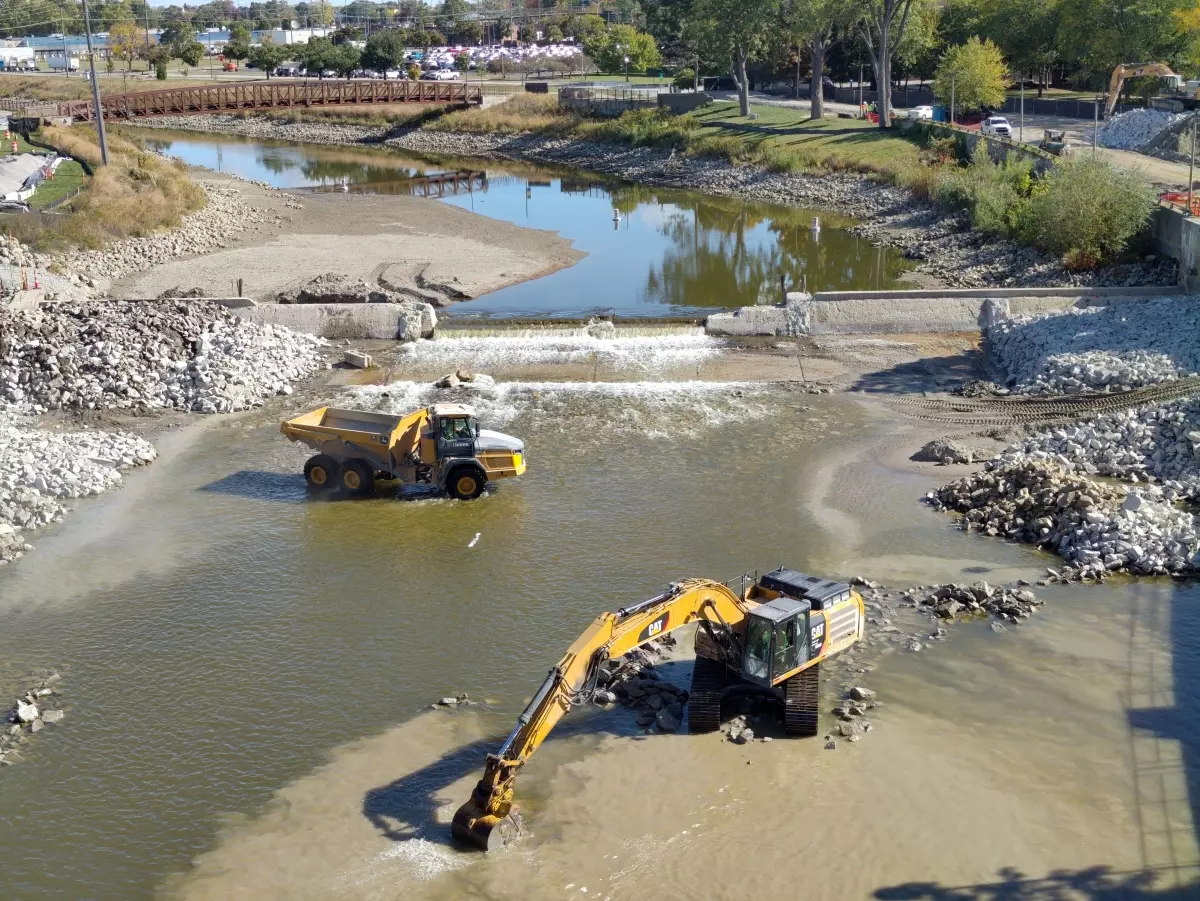
The Army Corps’ 2026 Nationwide Permits include the first-ever standalone permit for removing barriers to fish migration—but a parallel EPA proposal could limit states’ ability to protect water quality. Image by Roy Gilbert courtesy of USFWS
The U.S. Army Corps of Engineers’ 2026 Nationwide Permits took effect on March 15, bringing with them a new tool for reconnecting fragmented rivers and streams. The Corps reissued 56 existing permits and added one new one: NWP 60, the first standalone Nationwide Permit dedicated to improving passage for fish and other aquatic organisms.
The permit authorizes discharges of dredged or fill material for work that restores or enhances the ability of fish to move through aquatic ecosystems. Eligible activities include boulder and cobble placement, large wood installations, nature-like and conventional fishway construction, fish screens, fish lifts, fish bypass channels around existing in-stream structures, and the replacement of existing structures—such as culverts—that block aquatic passage. The Corps deliberately broadened the final language from the June 2025 proposal, swapping “culverts” for “structures” to cover a wider range of fish passage designs.
Why It Matters
The scale of the problem is staggering. The U.S. Fish and Wildlife Service estimates that millions of barriers nationwide fragment rivers and block fish migration. The agency’s National Fish Passage Program has removed or bypassed 3,500 barriers over 25 years, reopening access to 64,000 miles of upstream habitat. But the permitting process itself has been an obstacle: many fish passage projects previously required individual Corps permits, a slower and more expensive path than the streamlined Nationwide Permit process. NWP 60 is designed to shift those projects into the faster lane.
The permit carries a one-acre cap on the loss of waters of the United States, with a pre-construction notification required for projects exceeding lower impact thresholds. It does not authorize dam removal, and it does not authorize the construction of new culverts at crossings where none currently exist—projects that would need authorization under a different NWP or an individual permit. Fish passage work that may affect species listed under the Endangered Species Act still triggers ESA review, meaning projects in waters with threatened or endangered salmonids, sturgeon, or other listed species will continue to require coordination with USFWS or NOAA Fisheries.
Broader NWP Changes
Beyond NWP 60, the 2026 package reissues 56 of the 57 existing permits with limited changes. The Corps dropped NWP 56, which covered finfish mariculture, and incorporated “nature-based solutions” language across several permits, including NWP 13 (Bank Stabilization), NWP 27 (Aquatic Ecosystem Restoration), and NWP 54 (Living Shorelines). NWP 27, widely used for stream restoration work, also received streamlined reporting requirements that replace the previous pre-construction notification process in many cases—a change that should reduce costs and timelines for voluntary restoration projects.
The 2026 permits run through March 15, 2031.
Section 401: A Counterweight
The new fish passage permit arrived alongside a separate regulatory move that cuts the other direction. On January 13, the EPA proposed revisions to its Clean Water Act Section 401 water quality certification rules—the mechanism by which states impose conditions on federally permitted projects, including conditions designed to protect fisheries and aquatic habitat.
The proposed rule would narrow the scope of state certification review from the Biden-era “activity as a whole” standard to a discharge-only framework, limiting certifications to point-source discharges into waters of the United States. In practice, this would restrict states’ ability to use the certification process to address nonpoint-source pollution, impacts to state waters that fall outside federal jurisdiction, and broader watershed concerns. The proposal largely reinstates the framework from the Trump administration’s 2020 rule, which the Biden administration replaced in 2023.
The comment period closed on February 17, and the EPA has indicated it intends to finalize the rule in spring 2026.
For fly fishers, the tension is plain. NWP 60 gives fish passage advocates a faster permitting track for barrier removal and fishway construction—work that directly benefits trout, salmon, steelhead, and other migratory species. The Section 401 proposal, if finalized, would strip states of one of their primary tools for conditioning federal permits to protect the water quality those same fish depend on.
The post New Federal Permits Create Streamlined Path for Fish Passage Projects appeared first on MidCurrent.
Source: Fish2
CommentsWrite a Reply or Comment:
You must be logged in to post a comment.
About Us

Free Shipping
If your order is $35 or more, you may qualify for free shipping. With free shipping, your order will be delivered 5-8 business days.

