
Massachusetts Environmental Group Launches Statewide Campaign to End Non-Native Trout Stocking
The Berkshire Environmental Action Team is pressuring MassWildlife to end its stocking program, citing ecological harm to native eastern brook trout—and invoking the governor’s own biodiversity mandate to do it.
The Berkshire Environmental Action Team (BEAT), a Pittsfield-based nonprofit, has launched a statewide campaign called “Stop Non-Native Fish Stocking,” demanding that the Massachusetts Division of Fisheries and Wildlife (MassWildlife) end the routine release of hatchery-raised trout into the state’s rivers, lakes, and ponds.
The campaign escalates a fight that began locally. In early 2025, after more than 60 residents and conservationists wrote to the MassWildlife Fisheries and Wildlife Board, the agency halted stocking on the upper Deerfield River. BEAT is now pushing to take that model statewide.
The Case Against Stocking
MassWildlife operates five hatcheries—in Sandwich, Palmer, Belchertown, Sunderland, and Montague—that collectively stock more than 450,000 brook, brown, rainbow, and tiger trout into over 450 waterbodies across 264 towns each year. BEAT argues that nearly all of those fish are non-native species bred to support recreational angling, not to restore native ecosystems.
Chelsey Simmons, BEAT’s stewardship director, told WAMC Public Radio that hatchery-raised trout compete with native fish for food and habitat, alter aquatic food webs, and add stress to ecosystems already strained by warming temperatures. She cited studies suggesting 67 to 90 percent of stocked fish die within weeks to months of release—a point she said even MassWildlife has acknowledged.
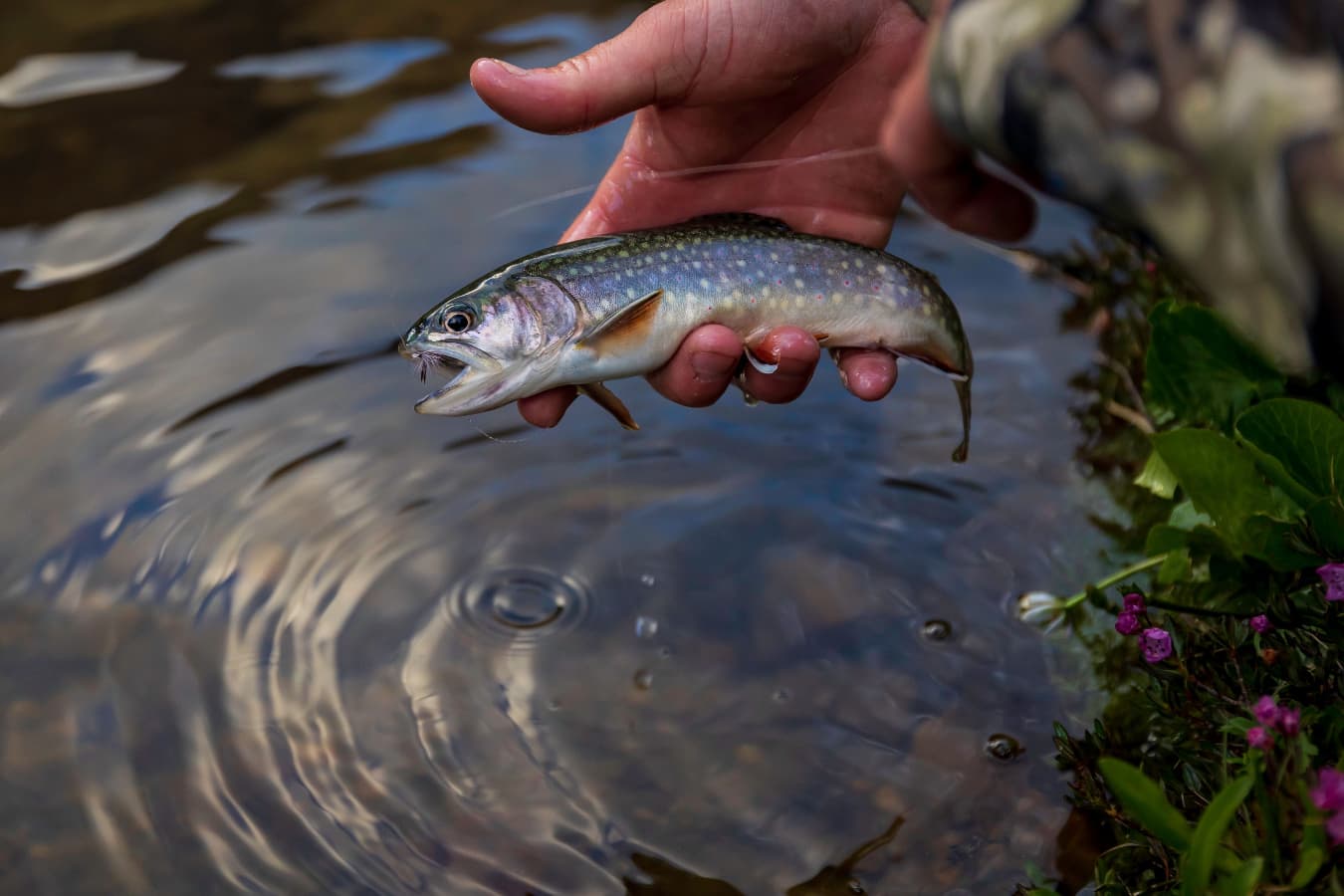
The eastern brook trout (Salvelinus fontinalis), New England’s only native trout, is the group’s flagship concern. Brook trout populations across the eastern United States have declined for decades due to habitat loss, warming water, and fragmented stream connectivity. BEAT contends that continued stocking of brown trout—a European species widely introduced across North America—compounds the pressure.
BEAT frames its demand around Governor Maura Healey’s Executive Order No. 618, signed in September 2023, which directed the Department of Fish and Game to set biodiversity conservation goals for 2030, 2040, and 2050. The state formally announced those goals in August 2025—the first time any state has comprehensively set biodiversity targets extending to 2050, including for coastal and marine habitats.
“We believe this routine stocking of non-native fish stands in direct conflict with the state’s biodiversity mandate,” Simmons told the Berkshire Eagle.
BEAT opposes all fish stocking—including stocking of native species like brook trout. Executive Director Brittany Ebeling told the Berkshire Eagle that stocking has nothing to do with improving native brook trout survival and that the organization favors habitat restoration instead.
MassWildlife Pushes Back
MassWildlife defended the program in statements to the Berkshire Eagle and WAMC, calling the stocking program popular with hundreds of thousands of anglers and a key part of its mission to expand access to recreational fishing. The agency said stocking supports goals of connecting people to nature, sustaining nature-based economies, and addressing food security.
The agency also pointed out that fewer than 10 percent of wild trout streams and rivers are stocked, and said it remains committed to conserving wild trout through habitat protection, water quality improvements, and restoring stream connectivity.
The Angling Perspective
Local Trout Unlimited leaders offered a more measured take. Justin Adkins, president of TU’s Taconic chapter, told the Berkshire Eagle that BEAT’s initiative aligns with his organization’s mission to reduce stocking, and that he has been meeting with BEAT’s leadership. But Adkins cautioned against an abrupt halt. If stocking stops entirely without adequate protections in place, he said, anglers may simply harvest more native and wild trout—potentially harming the populations the campaign is designed to protect.
Simmons acknowledged the nuance. “We realize that this is a very nuanced issue,” she told the Berkshire Eagle. “Certain rivers that are stocked regularly are very important for fly fishing and small businesses.”
What Comes Next
BEAT is hosting a free public webinar on March 3, 2026, titled “The Harmful Practice of Fish Stocking in Massachusetts and What You Can Do to Help.” The group is also running petition drives and encouraging residents to contact MassWildlife and the Department of Fish and Game directly.
Spring stocking season is approaching fast—MassWildlife typically begins releases in March and April—and the agency has given no indication it plans to alter its schedule. For New England fly anglers, the campaign poses a question that is rippling through fisheries debates nationwide: whether the recreational value of put-and-take stocking can be reconciled with the ecological demands of native species conservation, or whether the two are finally, irreconcilably at odds.
The post Massachusetts Environmental Group Launches Statewide Campaign to End Non-Native Trout Stocking appeared first on MidCurrent.
Source: Fish2
CommentsWrite a Reply or Comment:
You must be logged in to post a comment.
About Us

Free Shipping
If your order is $35 or more, you may qualify for free shipping. With free shipping, your order will be delivered 5-8 business days.

